
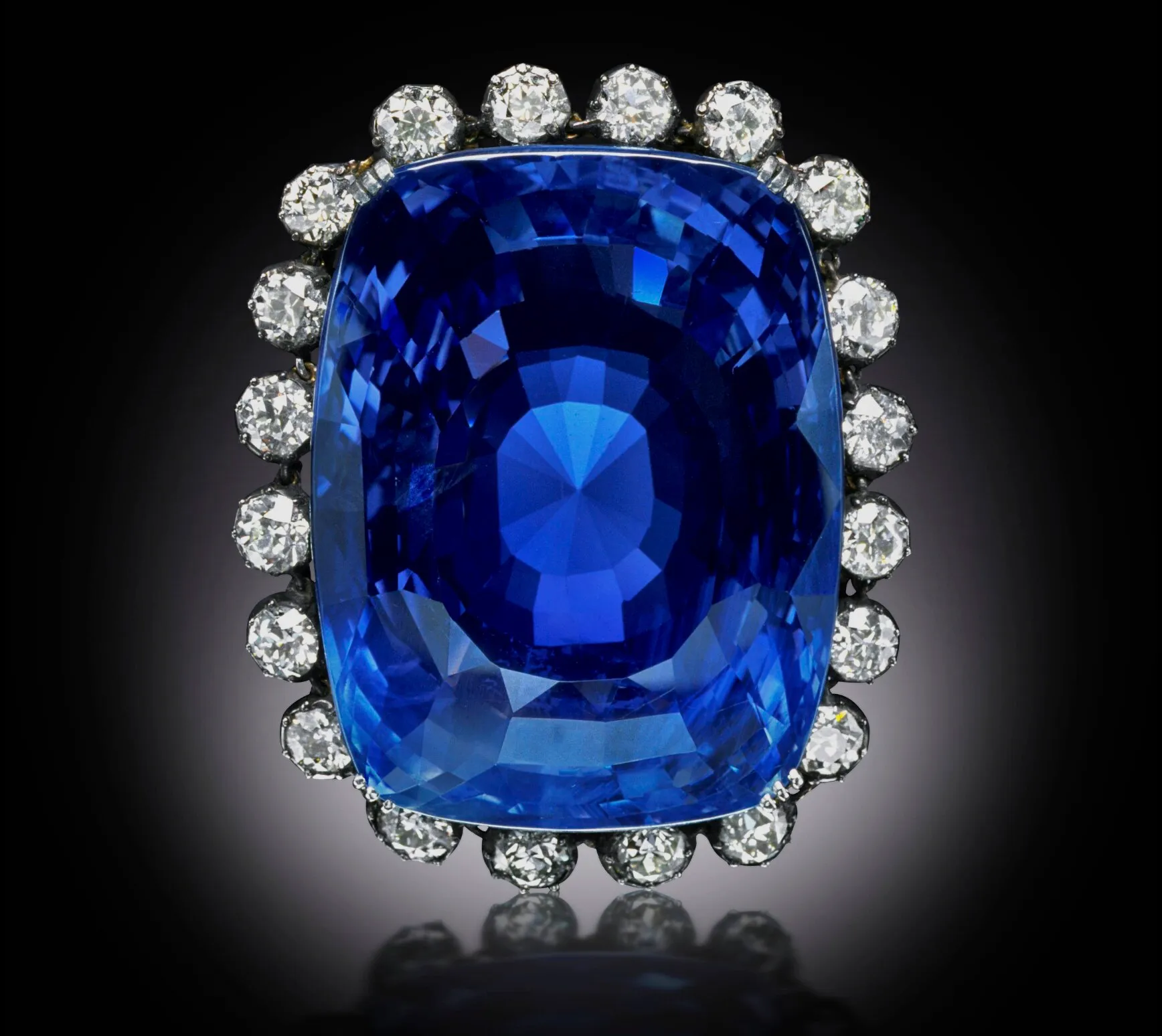
Photo: Chip Clark, Smithsonian National Museum of Natural History
Corundum
Sapphire
Corundum in every colour but red.
- Mohs hardness
- 9
- Crystal system
- Hexagonal
- Composition
- Al₂O₃ (aluminium oxide)
- Colours
- Blue, Pink, Yellow
- Origins
- Sri Lanka (Ceylon), Madagascar, Myanmar
- Birthstone
- September
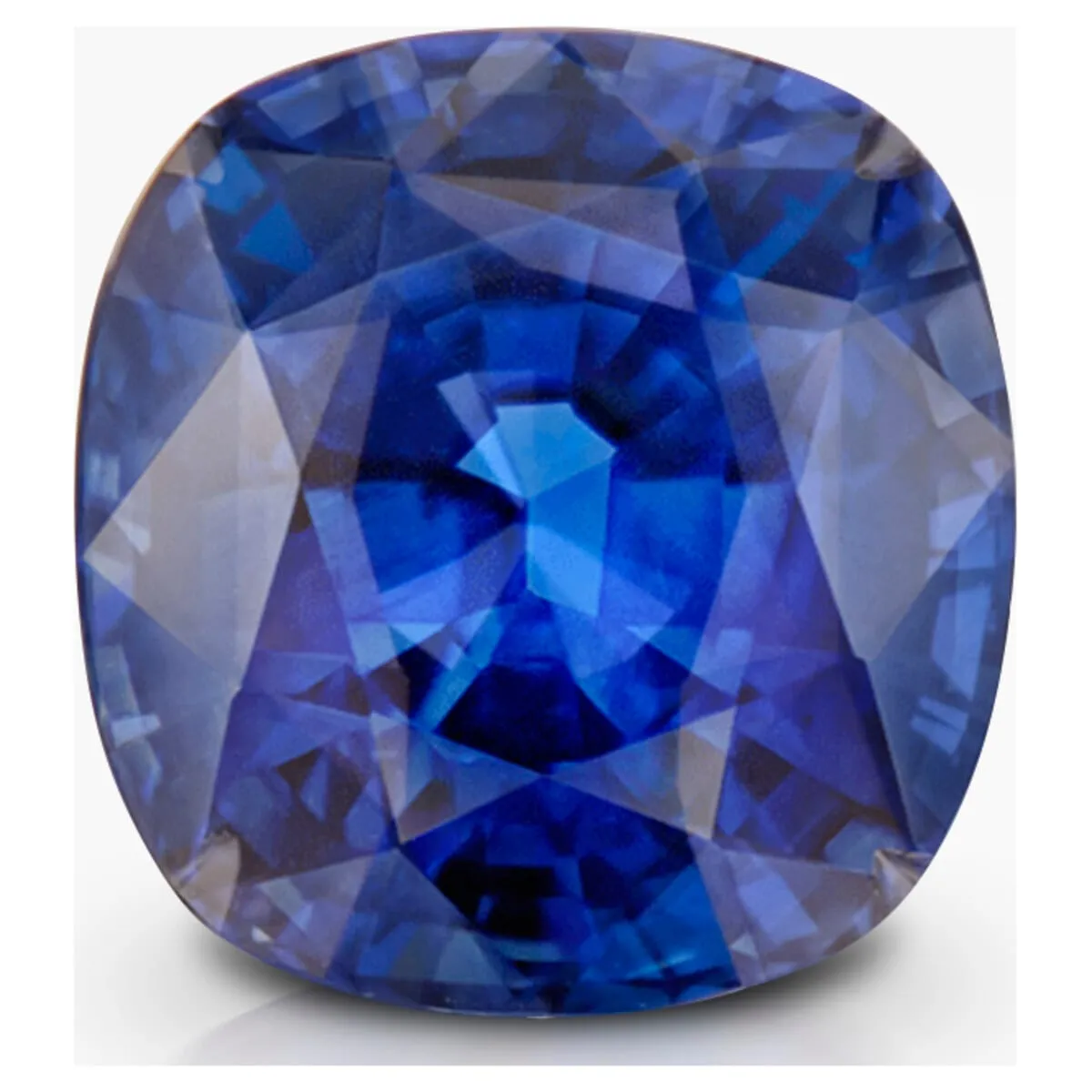
Sapphire is gem-quality corundum - the same mineral as ruby, distinguished only by colour. Trace iron and titanium produce the celebrated cornflower blue of Kashmir; chromium tilts it toward pink; iron alone yields the Australian deep blue-greens.
With a Mohs hardness of 9, sapphire is second only to diamond among naturally occurring gems and ideally suited to lifelong wear.
History
A brief history
Mined in Sri Lanka for over 2,000 years, sapphire crowned Roman emperors, Byzantine icons and the British Imperial State Crown (St Edward's Sapphire). Kashmir's velvety blues, discovered in 1881 and largely exhausted by 1925, remain the market benchmark.
Worn by clergy in the Middle Ages as a symbol of heaven; believed to protect against envy and harm.
Treatments
What to know
- Heat treatment - standard, stable, undisclosed at most price points (improves colour & clarity)
- Beryllium diffusion - produces orange/padparadscha tones; must be disclosed
- Lattice diffusion - surface colour penetration
- Glass-filling of fractures - disclosed; reduces durability
Care & handling
How to wear it
- Excellent for daily wear
- Ultrasonic and steam safe for untreated and heat-only gemstones
- Avoid ultrasonic for glass-filled or heavily fractured material
Jewellery use
Setting the gemstone
Engagement rings (notably popularised by Princess Diana's 12 ct Ceylon sapphire), tennis lines, men's signets and statement cocktail rings.
Famous examples
- · Star of India (563 ct)
- · Logan Sapphire (422 ct)
- · Stuart Sapphire (104 ct)
- · Bismarck Sapphire (98.6 ct)
Same family