
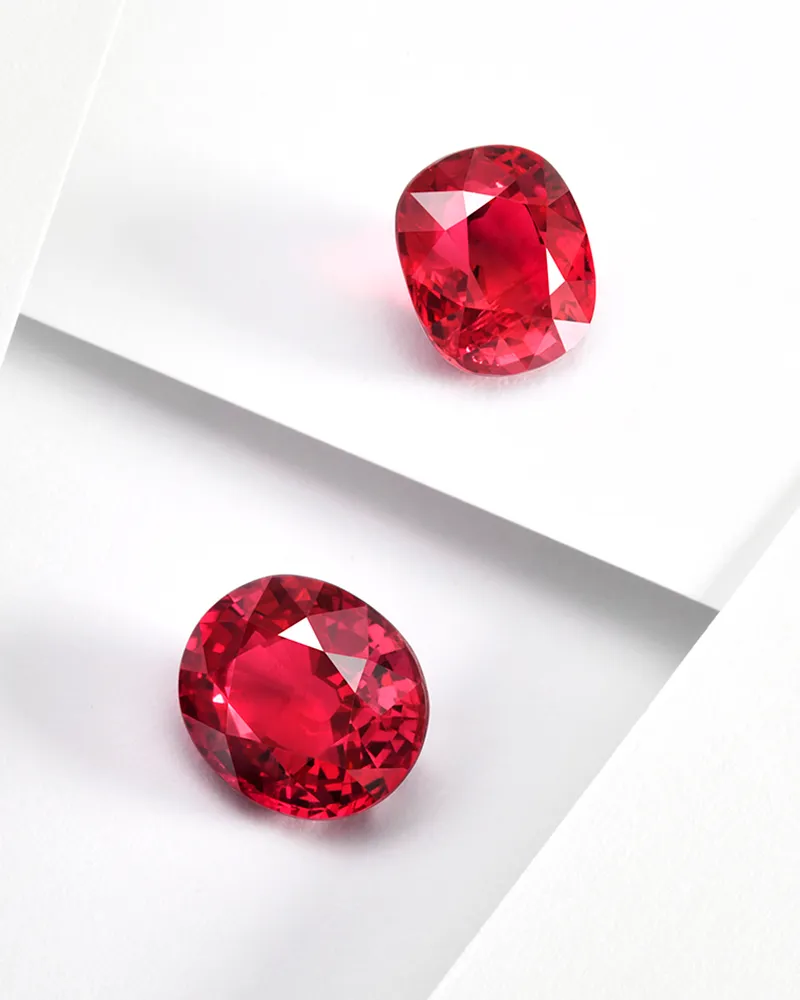
Corundum
Ruby
The king of gems - corundum coloured by chromium.
- Mohs hardness
- 9
- Crystal system
- Hexagonal
- Composition
- Al₂O₃ with Cr
- Colours
- Pigeon-blood red, Pink-red, Purplish red
- Origins
- Myanmar (Mogok & Mong Hsu), Mozambique, Madagascar
- Birthstone
- July
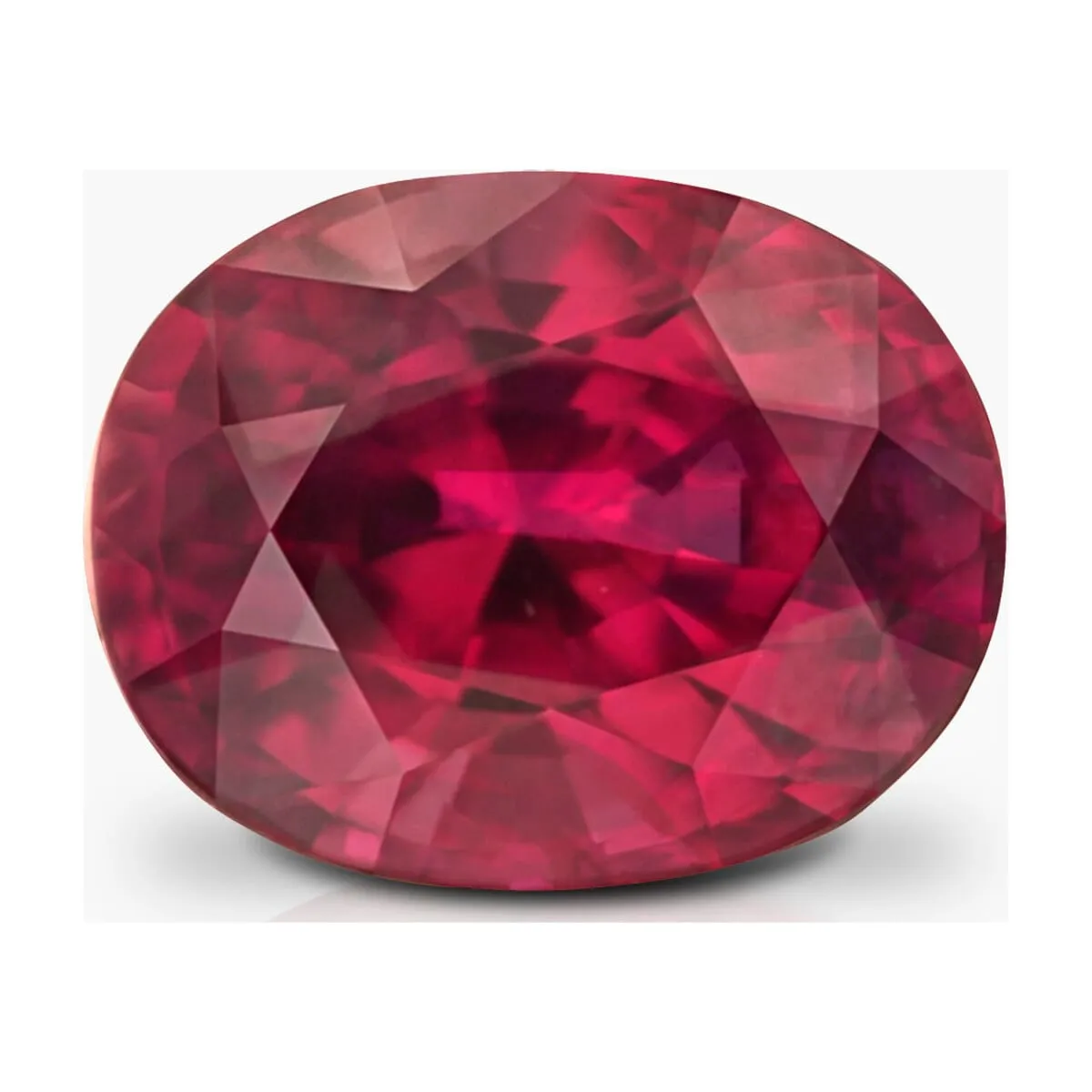
Ruby is corundum coloured red by trace chromium. The most coveted hue - Burmese 'pigeon's blood' - is a pure, slightly fluorescent red that glows under UV-rich daylight.
Fine ruby above three carats is rarer than equivalent diamond and now regularly outperforms it at auction.
History
A brief history
Mogok (Upper Burma) has produced the world's finest rubies for over a millennium. Mozambique's Montepuez deposit, discovered in 2009, has reshaped supply at all qualities.
In Sanskrit, ratnaraj - 'king of precious gemstones'. Burmese warriors implanted rubies under the skin for invincibility in battle.
Treatments
What to know
- Heat treatment - standard
- Lead-glass filling - common in commercial goods; must be disclosed; reduces durability
- Beryllium diffusion - disclosed
Care & handling
How to wear it
- Excellent durability for daily wear
- Ultrasonic safe only for untreated/heated gemstones
- Glass-filled rubies require gentle warm soapy water only
Jewellery use
Setting the gemstone
High-jewellery rings, necklaces, halo settings. Pairs naturally with diamond and white metals to maximise colour saturation.
Famous examples
- · Sunrise Ruby (25.59 ct)
- · DeLong Star Ruby (100 ct)
- · Carmen Lúcia Ruby (23.1 ct)
Same family