
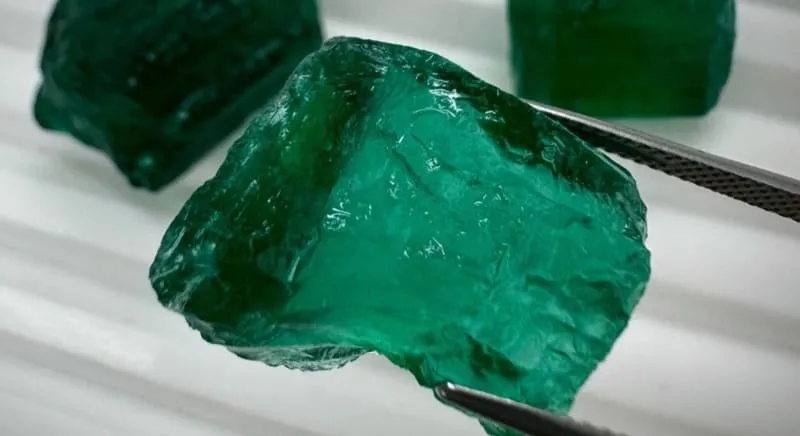
Beryl
Emerald
Beryl coloured by chromium and vanadium - the green of empires.
- Mohs hardness
- 7.5–8
- Crystal system
- Hexagonal
- Composition
- Be₃Al₂(SiO₃)₆ with Cr/V
- Colours
- Vivid green, Bluish green, Yellowish green
- Origins
- Colombia (Muzo, Chivor), Zambia (Kagem), Brazil
- Birthstone
- May
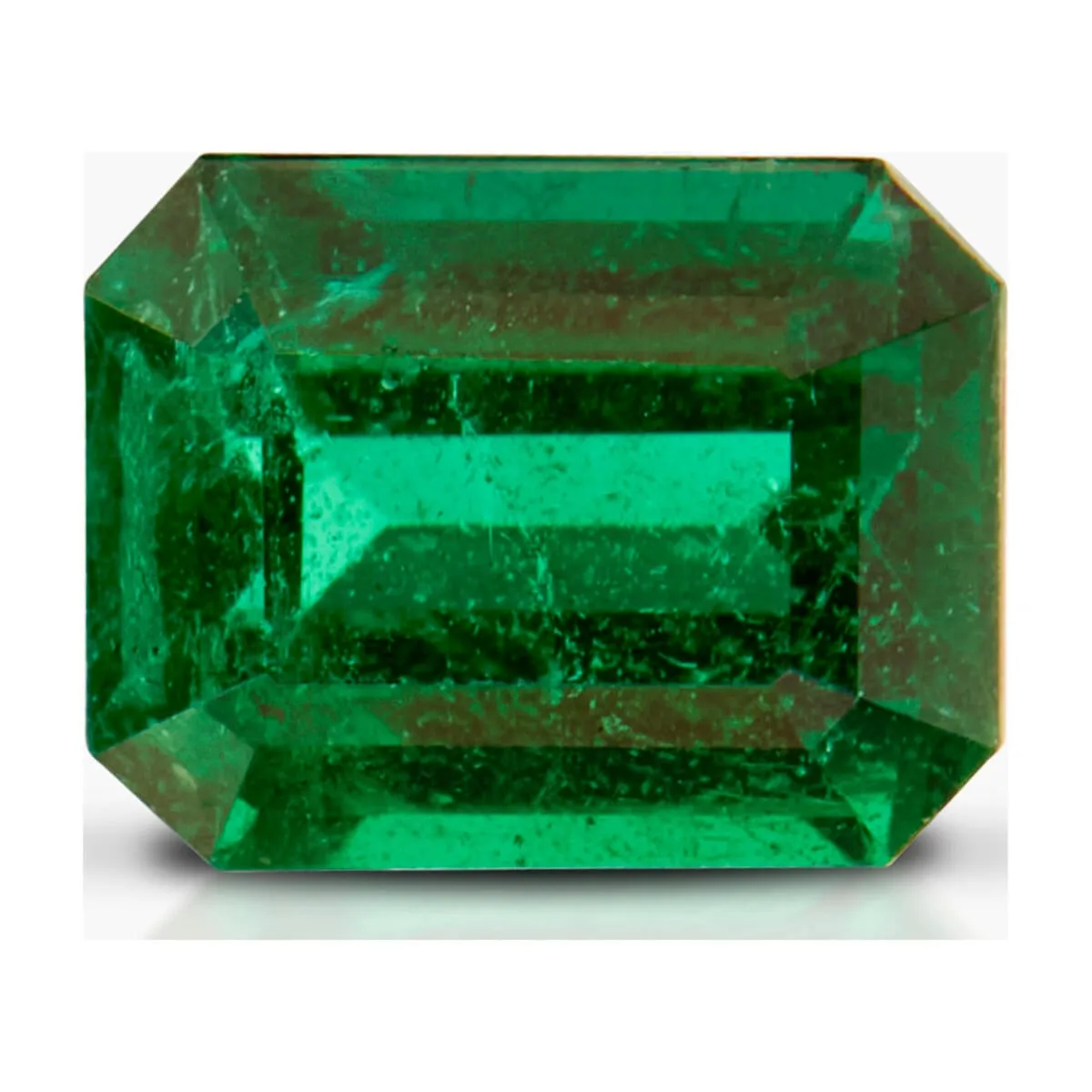
Emerald is beryl whose green derives from chromium, vanadium, or both. Colombian gemstones lean pure green with subtle warmth; Zambian material runs slightly bluer and is often cleaner.
Emerald is famously included - the trade calls inclusions 'jardin'. A flawless emerald above two carats is essentially unheard of in nature.
History
A brief history
Mined by the Egyptians from at least 1500 BCE in Cleopatra's Mines. The Spanish conquistadors brought Colombian emeralds to Europe and Mughal India, where they were carved with sacred verses.
Sacred to Venus; believed to reveal truth and protect against deception when held under the tongue.
Treatments
What to know
- Oil treatment (cedarwood, palm) - near-universal; improves clarity by filling fractures
- Resin/polymer filling - more durable but disclosed
- Grades: 'none', 'minor', 'moderate', 'significant' enhancement (Gübelin/SSEF/AGL)
Care & handling
How to wear it
- Never ultrasonic, never steam - pressure pushes oil out of fractures
- Warm soapy water with soft brush only
- Re-oiling every 5–10 years preserves brilliance
Jewellery use
Setting the gemstone
Best in protective settings - bezel, halo, or substantial prongs. Emerald cut (rectangular step cut) was developed specifically to reduce stress on the brittle crystal.
Famous examples
- · Mogul Mughal Emerald (217.8 ct, carved)
- · Chalk Emerald (37.82 ct)
- · Bahia Emerald (rough, ~752 lb)