
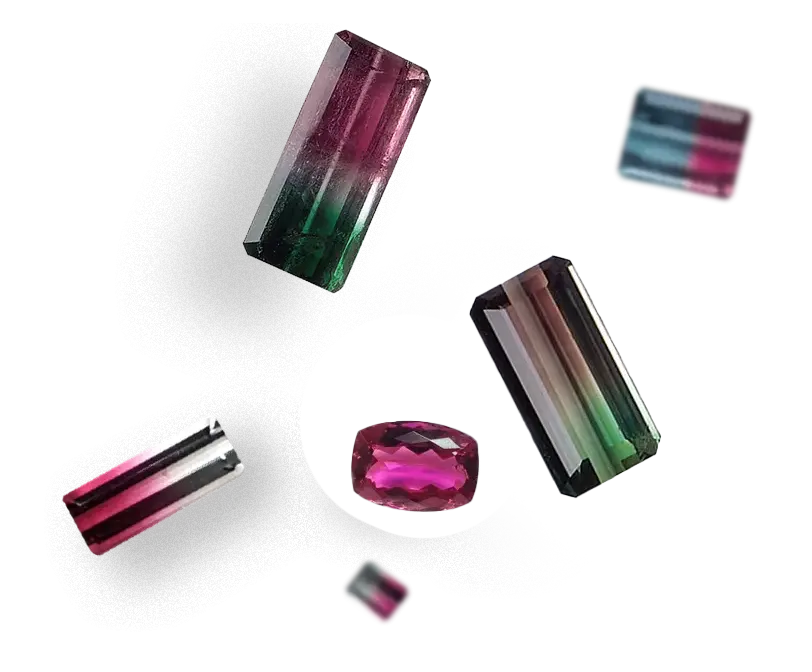
Tourmaline group (elbaite, dravite, schorl…)
Tourmaline
The most colour-diverse gem species on Earth.
- Mohs hardness
- 7–7.5
- Crystal system
- Hexagonal
- Composition
- Complex borosilicate
- Colours
- Pink (rubellite), Green (verdelite/chrome), Blue (indicolite)
- Origins
- Brazil (Paraíba, Minas Gerais), Mozambique, Nigeria
- Birthstone
- October
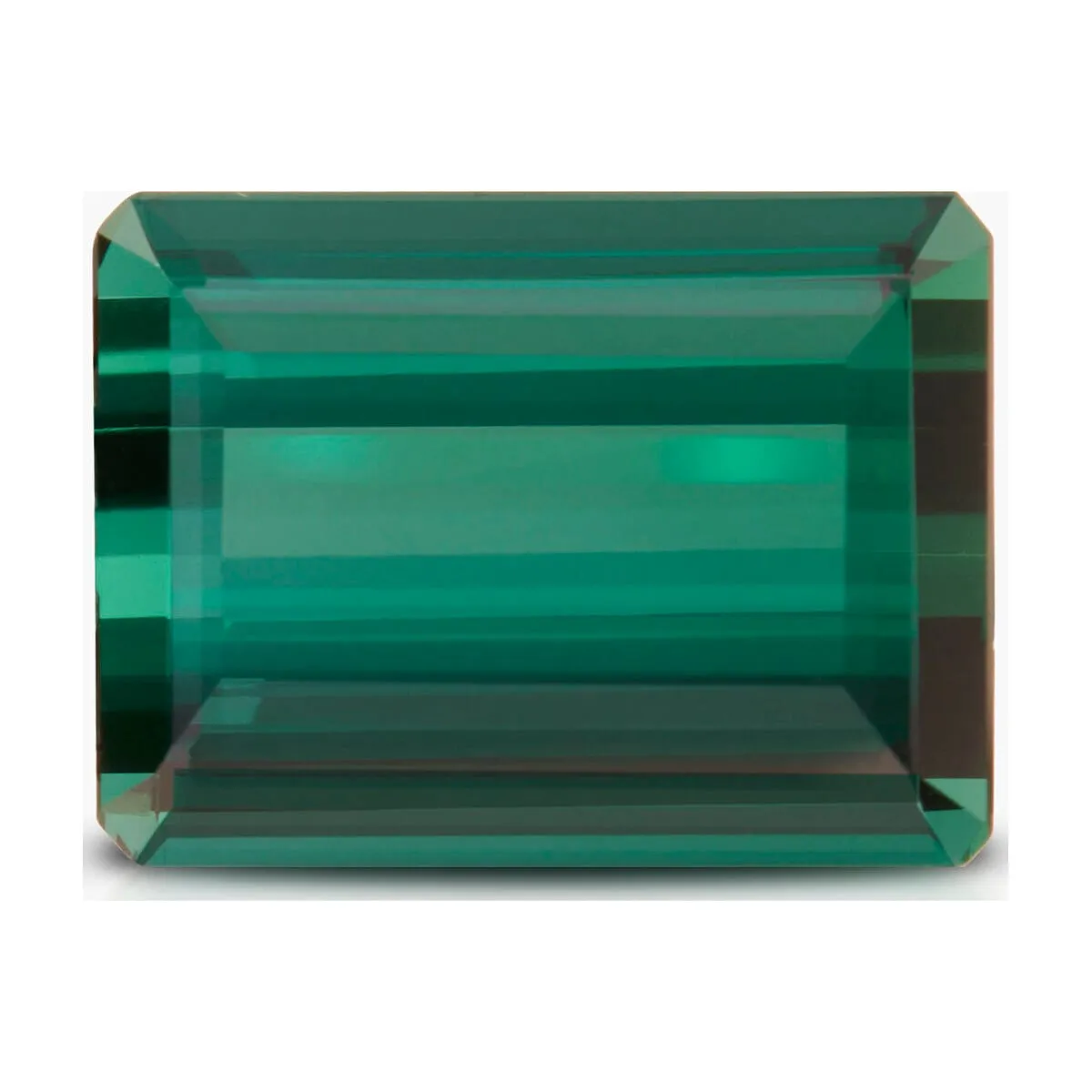
Tourmaline occurs in every spectral hue - and several within a single crystal (the 'watermelon' bicolour). Its crystals are pyroelectric and piezoelectric: they generate static charge when heated or compressed.
Paraíba tourmaline - coloured by copper - was discovered in Brazil in 1989 and remains the rarest and most valuable variety. Mozambique now produces similar material at lower (but still significant) prices.
Treatments
What to know
- Heat treatment - common for blue and green
- Irradiation - used for some pinks and reds
- Clarity enhancement (oil/resin) - sometimes used for rubellite
Care & handling
How to wear it
- Ultrasonic generally safe for clean gemstones; avoid for heavily included rubellite
- Steam not recommended
Jewellery use
Setting the gemstone
Excellent versatility. Paraíba reserved for high-end pieces; everyday tourmalines suit rings, pendants and earrings.
Famous examples
- · Ethereal Carolina Divinity (191.87 ct, Paraíba)