
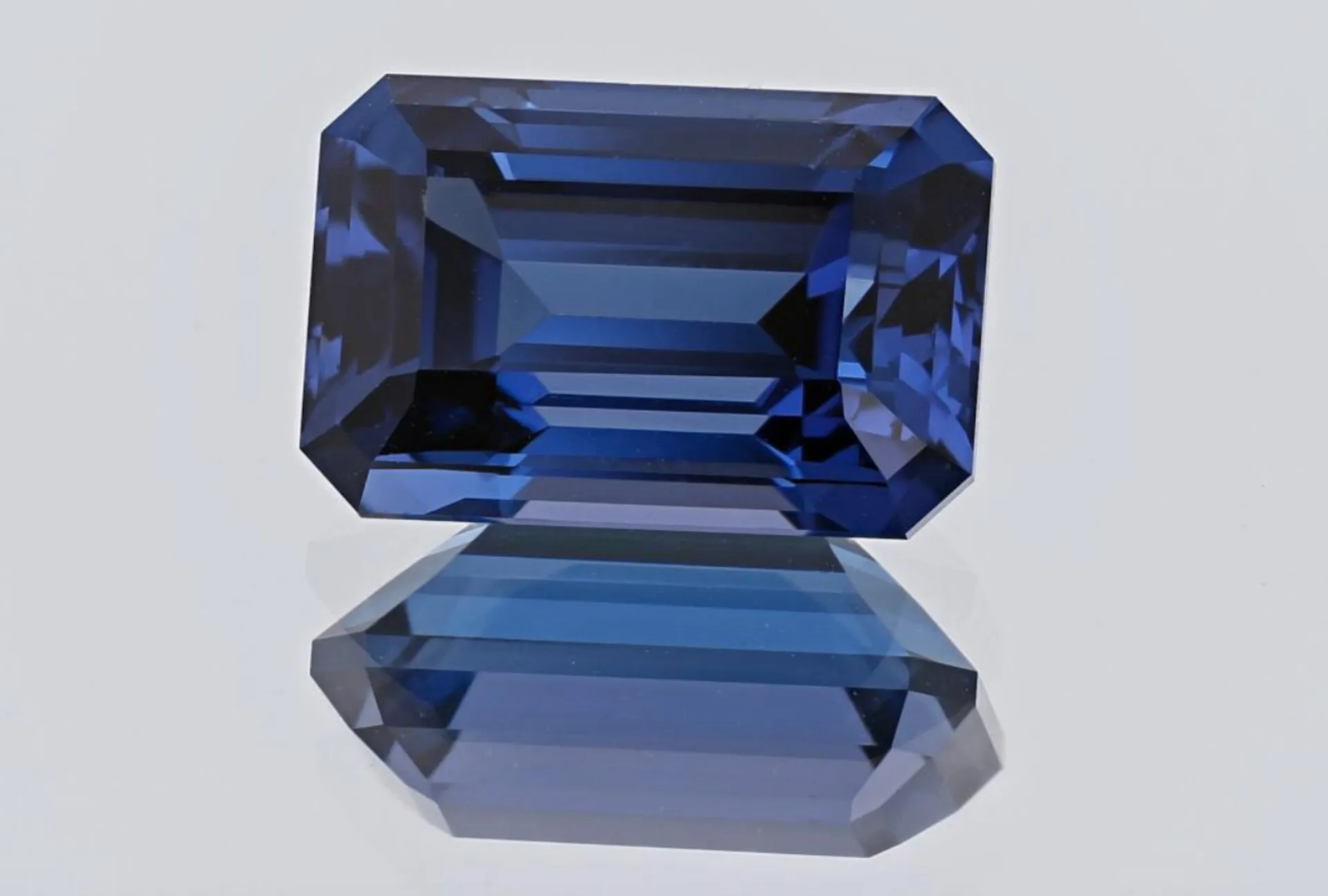
Photo: Greg Polley, Smithsonian National Museum of Natural History
Zoisite
Tanzanite
Found in only one place on Earth.
- Mohs hardness
- 6.5–7
- Crystal system
- Orthorhombic
- Composition
- Ca₂Al₃(SiO₄)₃(OH)
- Colours
- Violet-blue, Blue, Purple
- Origins
- Tanzania (Merelani Hills only)
- Birthstone
- December
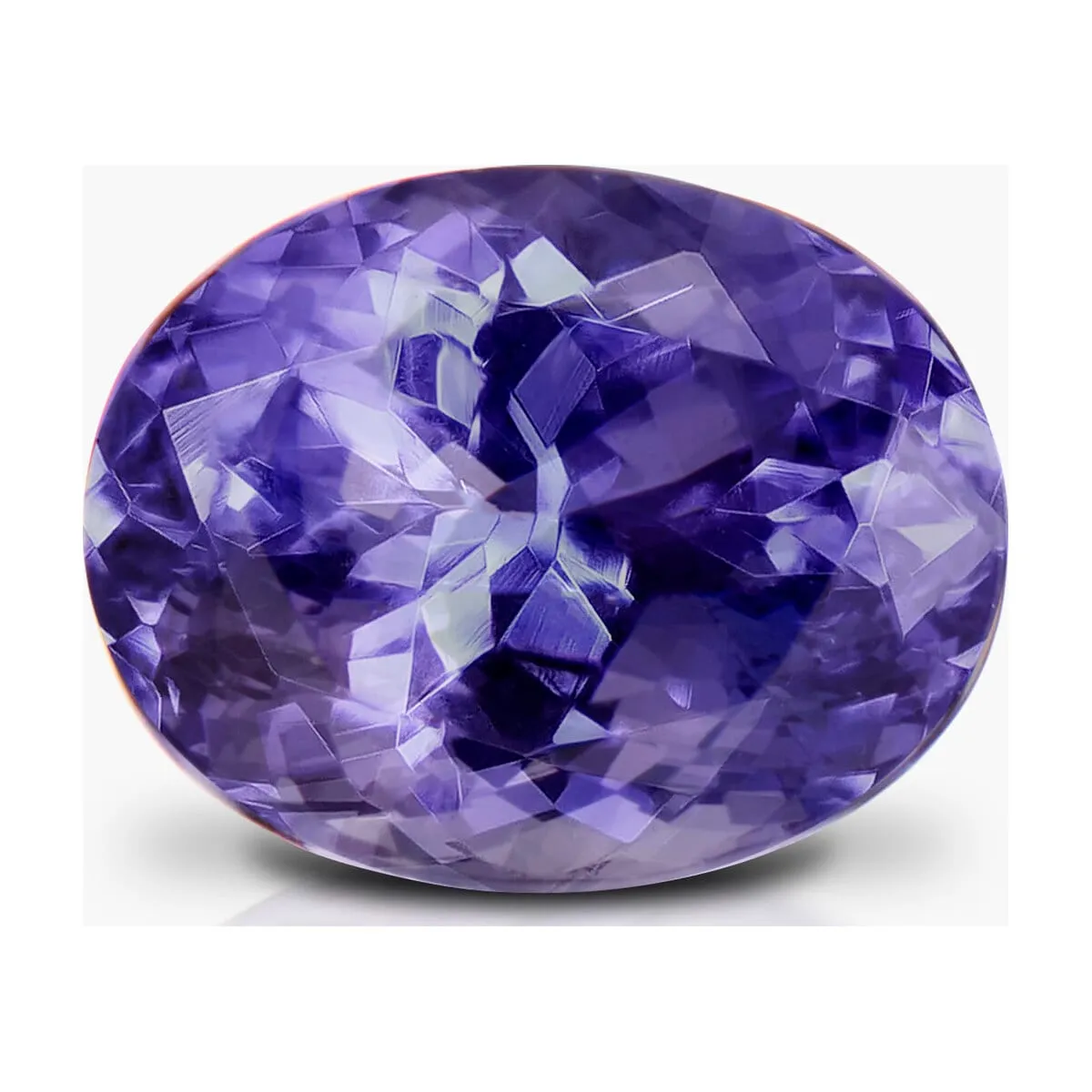
Discovered in 1967 at the foot of Kilimanjaro, tanzanite is mined from a single 7 km stretch in northern Tanzania. Geologists estimate the deposit may be exhausted within a generation.
Strongly trichroic in the rough - showing blue, violet and burgundy from different angles - almost all gem material is heated to ~600 °C to produce the stable violet-blue.
History
A brief history
Named by Tiffany & Co. in 1968 in honour of its country of origin.
Treatments
What to know
- Heat treatment - near-universal, stable, accepted
Care & handling
How to wear it
- Sensitive to sudden temperature change and ultrasonic vibration
- Warm soapy water only; avoid ultrasonic and steam
- Best set in pendants and earrings rather than rings
Jewellery use
Setting the gemstone
Excellent for occasional-wear pieces - pendants, earrings, brooches. Suitable for rings only with protective settings and careful wear.
Famous examples
- · Queen of Kilimanjaro (242 ct)
- · Mawenzi (16,839 ct rough)