
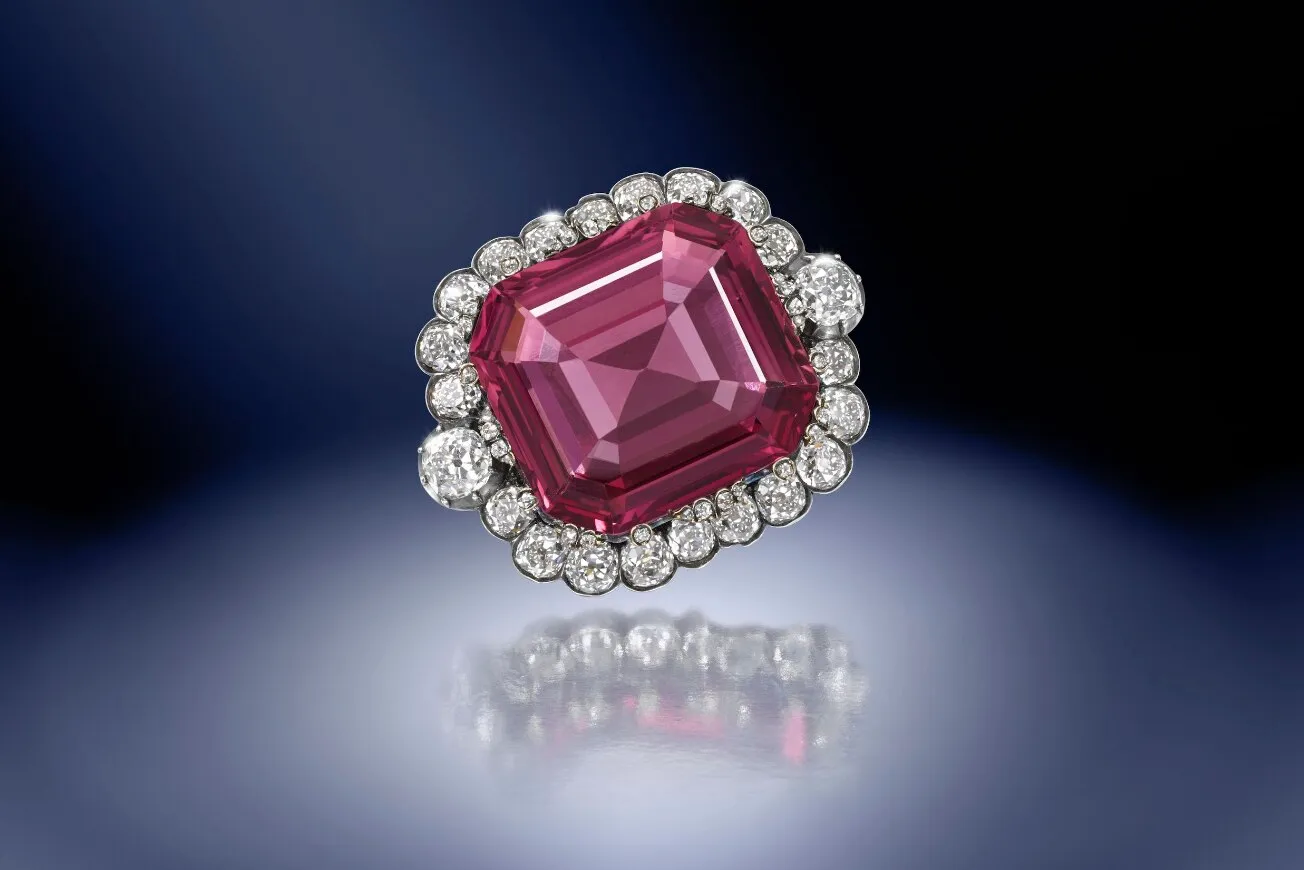
The Hope Spinel, courtesy of Bonhams
Spinel group
Spinel
Mistaken for ruby for centuries - now collected on its own merits.
- Mohs hardness
- 8
- Crystal system
- Cubic
- Composition
- MgAl₂O₄
- Colours
- Red, Pink, Hot pink (Mahenge)
- Origins
- Myanmar (Mogok), Tanzania (Mahenge), Tajikistan (Kuh-i-Lal)
- Birthstone
- August
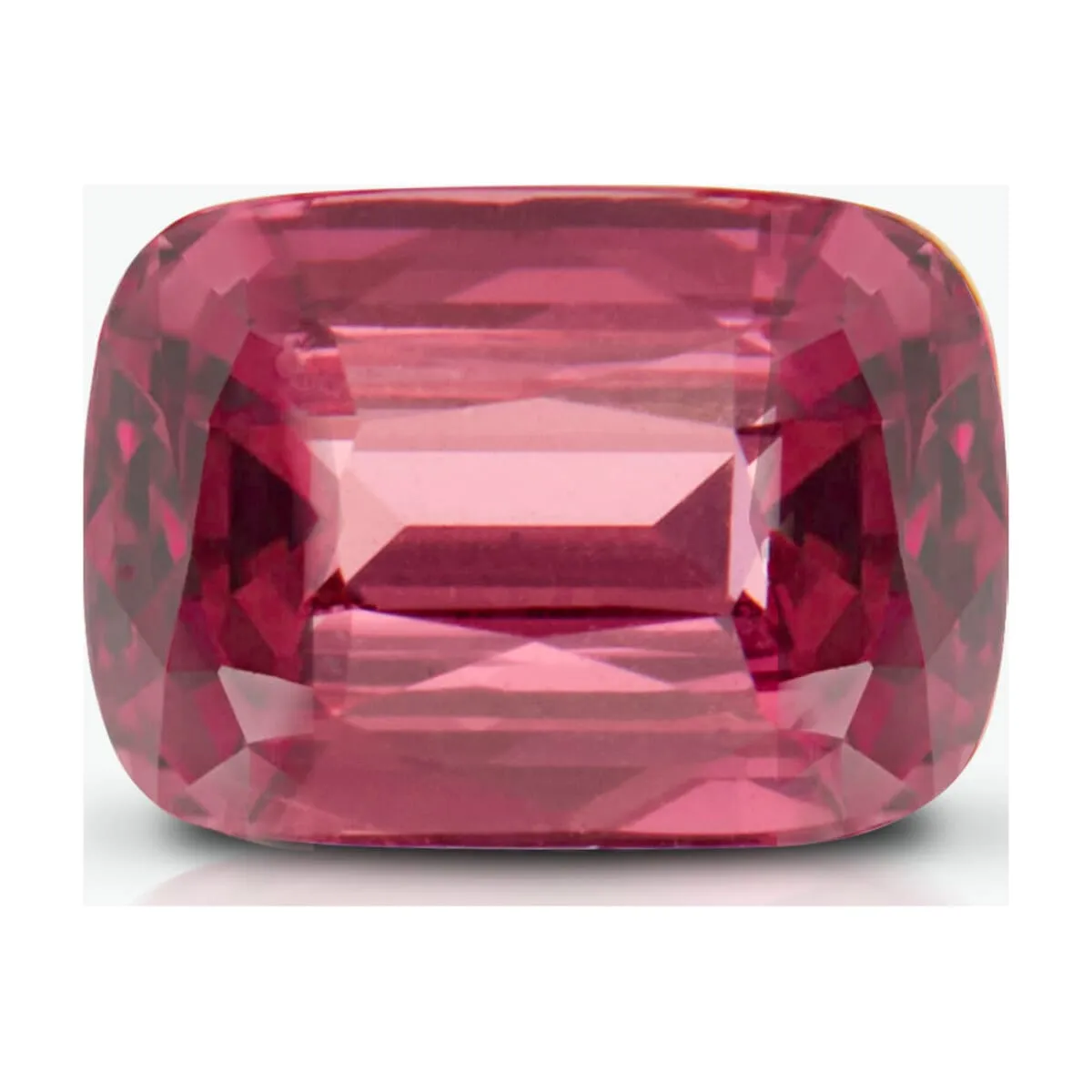
Spinel forms in the same marble deposits as ruby and was historically misidentified as such - the 'Black Prince's Ruby' and 'Timur Ruby' in the British Crown Jewels are both red spinels.
Unlike most coloured gemstones, spinel is virtually never treated. A natural, unheated spinel is the gemmological default, which adds to its modern collectability.
History
A brief history
Spinel was distinguished from ruby only in 1783 by chemical analysis. The 1980s rediscovery of Mahenge in Tanzania revived the market, with electric pink-red 'neon' material commanding premiums.
Long associated with royal regalia - many 'rubies' in historical European crown jewels are in fact spinel.
Treatments
What to know
- Generally untreated - a major selling point
Care & handling
How to wear it
- Excellent durability - ultrasonic and steam usually safe
- Avoid prolonged exposure to harsh chemicals
Jewellery use
Setting the gemstone
Outstanding daily-wear gemstone. Increasingly chosen as a bespoke alternative to ruby and pink sapphire for engagement rings.
Famous examples
- · Black Prince's Ruby (170 ct, spinel)
- · Timur Ruby (361 ct, spinel)
- · Hope Spinel (50.13 ct)