
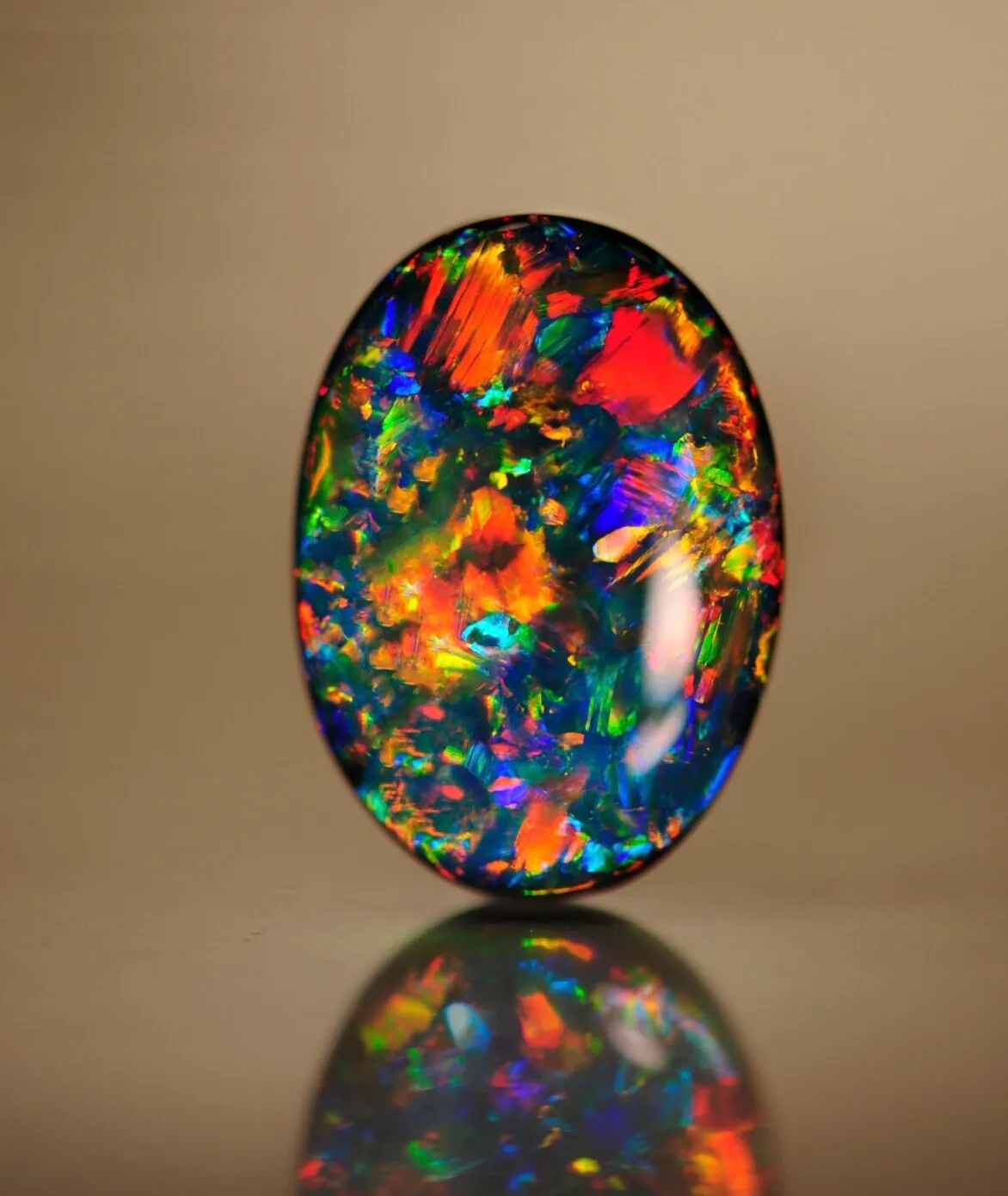
Black Opal, courtesy of Damien Cody
Hydrated silica
Opal
A play of colour from microscopic silica spheres.
- Mohs hardness
- 5.5–6.5
- Crystal system
- Amorphous
- Composition
- SiO₂·nH₂O
- Colours
- White, Black, Boulder
- Origins
- Australia (Lightning Ridge, Coober Pedy), Ethiopia (Welo), Mexico
- Birthstone
- October
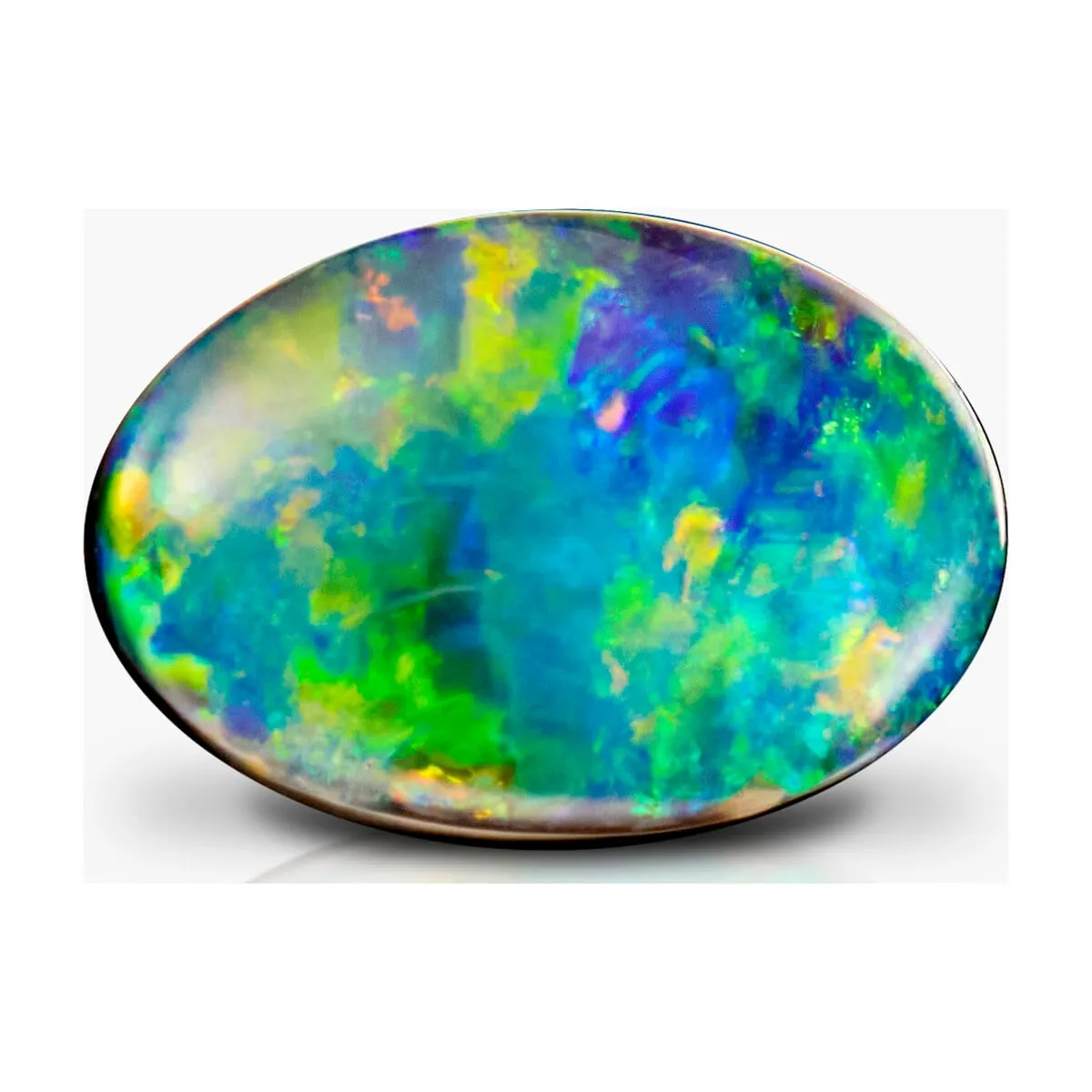
Opal contains 3–21% water and is built from stacked silica spheres that diffract light into spectral 'play-of-colour'. Black opal from Lightning Ridge - with a dark body that intensifies the fire - is the most valuable variety.
Ethiopian Welo opal, on the market since 2008, is hydrophane: it temporarily absorbs water and changes appearance.
Pliny called it the loveliest of gems; later European folklore wrongly cast it as unlucky after a Walter Scott novel.
Treatments
What to know
- Smoke / sugar-acid treatment - darkens body colour (disclosed)
- Polymer impregnation for stabilisation
Care & handling
How to wear it
- Avoid heat, ultrasonic, steam and harsh chemicals
- Never store in a safe deposit box for long periods - can craze if dried out
- Wipe with damp cloth; avoid prolonged immersion for hydrophane material
Jewellery use
Setting the gemstone
Pendants, earrings, brooches and protected ring settings. Doublets and triplets extend wearability of thin material.
Famous examples
- · Olympic Australis (17,000 ct, rough)
- · Aurora Australis (180 ct, black)