
Rock (lazurite + calcite + pyrite)
Lapis Lazuli
The blue of pharaohs and Renaissance painters.
- Mohs hardness
- 5–6
- Composition
- Lazurite-dominant rock
- Colours
- Deep blue with golden pyrite flecks
- Origins
- Afghanistan (Sar-e-Sang - for 6,000+ years), Chile, Russia
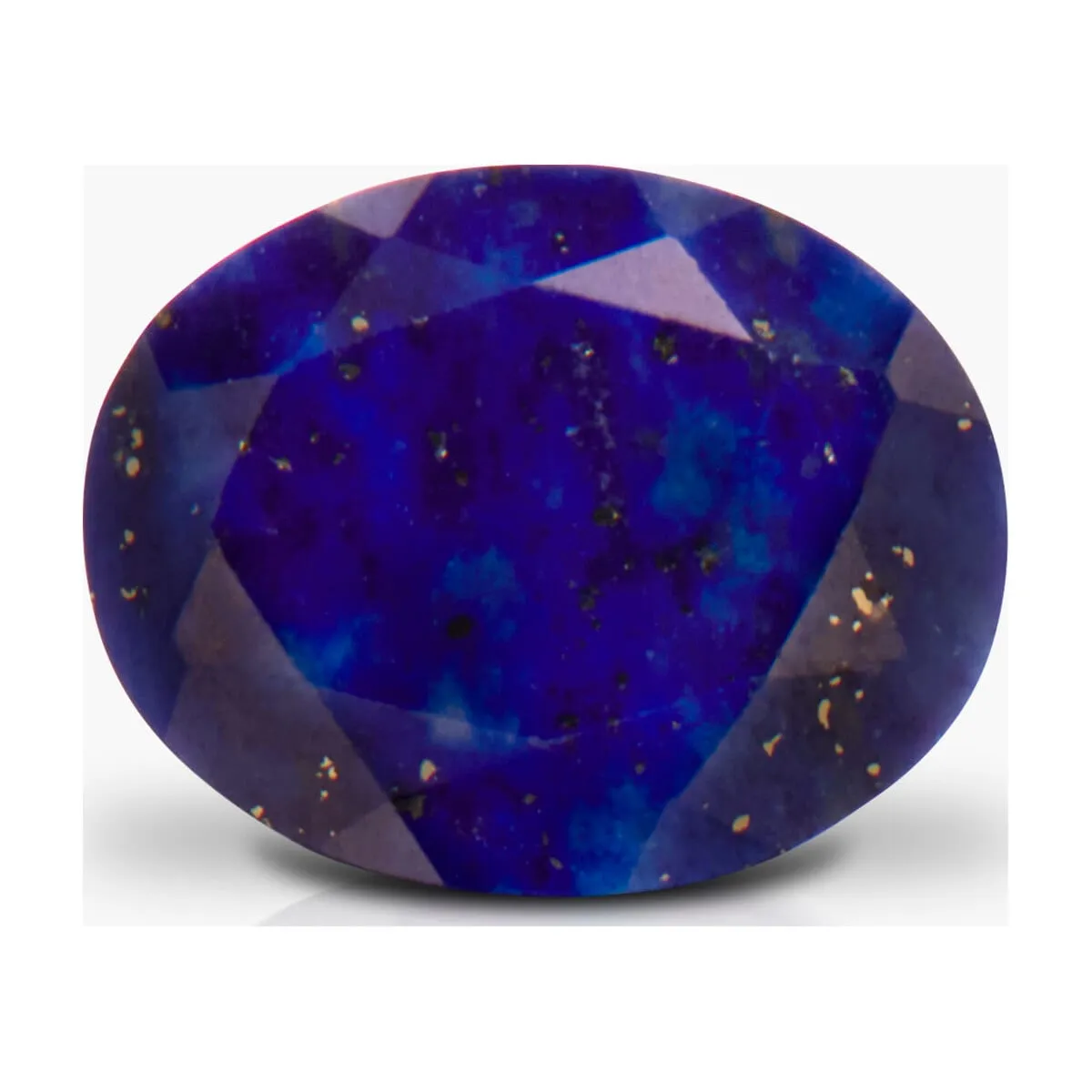
Lapis lazuli has been mined continuously from Afghanistan's Sar-e-Sang valley since at least 4000 BCE. Tutankhamun's funerary mask, Sumerian seals and Vermeer's ultramarine pigment all draw on the same source.
Finest material is uniformly deep royal blue with sparse golden pyrite - too much white calcite reduces value.
Treatments
What to know
- Wax - minor
- Dyeing - used for paler material; disclosed
Care & handling
How to wear it
- Porous - avoid chemicals, ultrasonic and prolonged water
- Wipe with damp cloth
Jewellery use
Setting the gemstone
Cabochons, beads, inlay. Never set in rings exposed to daily knocks.