
Native element (carbon)
Diamond
The hardest natural substance on Earth.
- Mohs hardness
- 10
- Crystal system
- Cubic
- Composition
- C (pure carbon)
- Colours
- Colourless, Yellow, Brown
- Origins
- Botswana, Russia, Canada
- Birthstone
- April
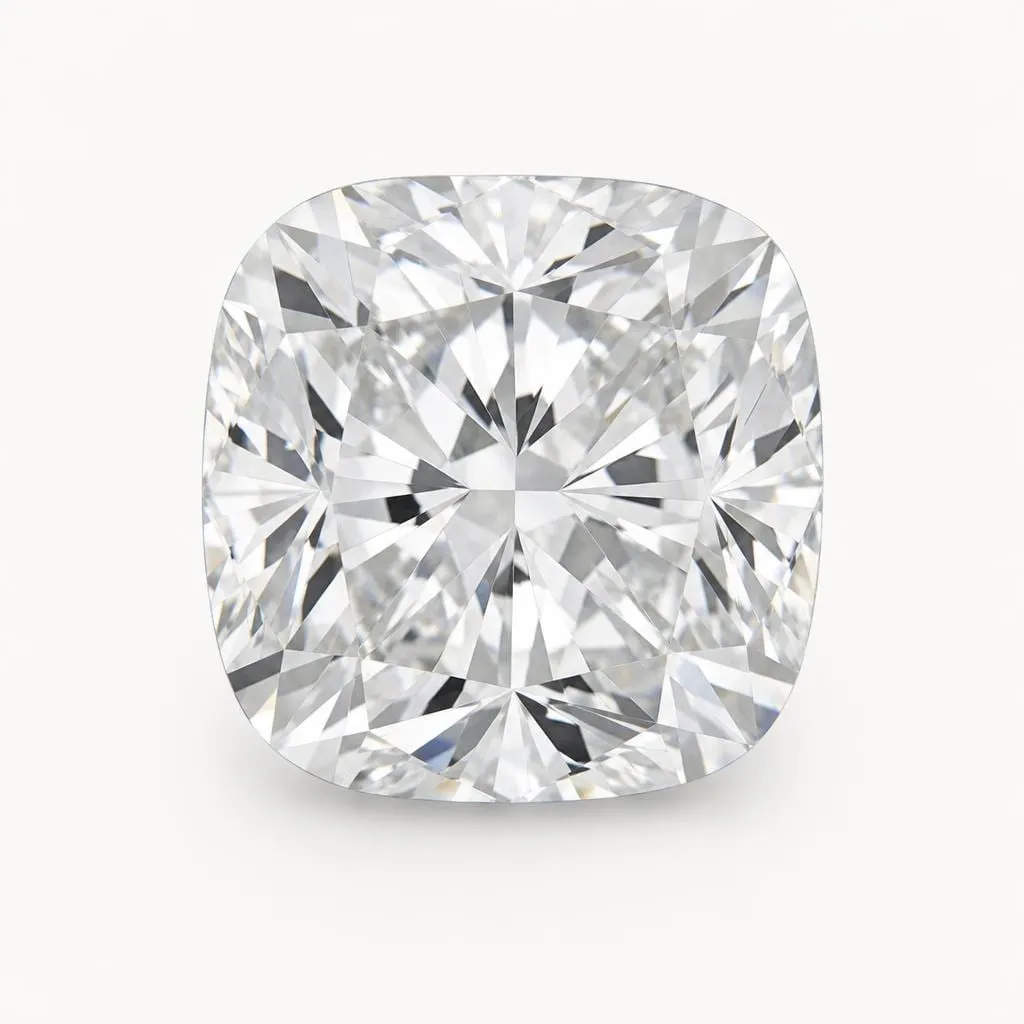
Crystallised from carbon under immense pressure 150 km below the surface, diamond is unmatched in hardness, brilliance and cultural reach. It scores a perfect 10 on the Mohs scale and disperses light into spectral fire like no other gem.
Though most associated with the colourless ideal, diamonds occur in a full spectrum of fancy colours - yellow, brown, pink, blue, green, even red - tinted by trace elements or lattice defects. The most celebrated of all is the Hope Diamond, a 45.52-carat deep blue gemstone coloured by boron, now housed at the Smithsonian and one of the most famous gems in the world.
More than 80% of the world's rough is industrial-grade. The remainder fuels a market built on the four Cs - carat, colour, clarity, cut - codified by GIA in the 1950s and now the global language of value.
History
A brief history
First mined in India around the 4th century BCE, diamonds were treasured as talismans long before they were faceted. The discovery of the Cullinan in 1905 (3,106 ct rough) and the rise of De Beers' Kimberley operations transformed the trade. Today Botswana leads global production by value.
Ancient Greeks called it adámas - unconquerable. Believed in medieval Europe to render warriors invincible.
Treatments
What to know
- HPHT (high-pressure, high-temperature) - improves colour
- Laser drilling - removes dark inclusions
- Fracture filling - hides surface-reaching feathers
- Irradiation + annealing - produces fancy colours
Care & handling
How to wear it
- Hardest gem known but cleavable along octahedral planes - protect from sharp knocks
- Ultrasonic and steam cleaning safe for untreated gemstones
- Avoid ultrasonic for fracture-filled or heavily included diamonds
Jewellery use
Setting the gemstone
Suitable for daily-wear engagement rings, eternity bands, tennis bracelets and statement pendants. Round brilliant remains the most efficient cut for fire and brightness.
Famous examples
- · Cullinan I (530 ct)
- · Hope (45.52 ct, blue)
- · Koh-i-Noor (105.6 ct)
- · Tiffany Yellow (128.54 ct)