
Apatite
Apatite
Neon colour at collector prices - the gem that fools the eye.
- Mohs hardness
- 5
- Crystal system
- Hexagonal
- Composition
- Ca₅(PO₄)₃(F,Cl,OH)
- Colours
- Neon blue-green, Paraiba-like blue, Green
- Origins
- Madagascar, Brazil, Myanmar
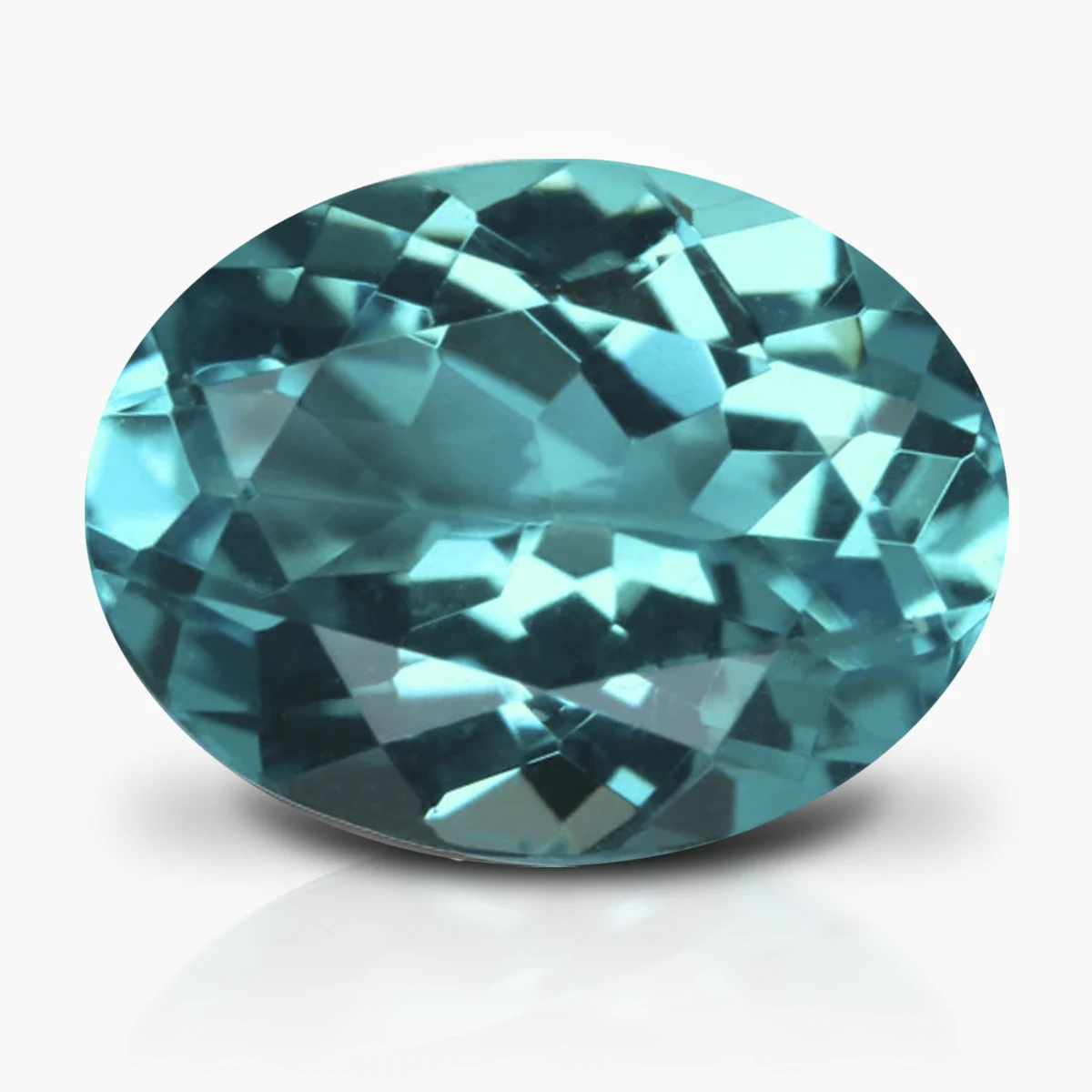
Apatite is best known for an electric blue-green that rivals Paraiba tourmaline, driven by trace amounts of manganese and rare-earth elements. The most sought-after material comes from Madagascar, where vivid neon blue-green crystals are found alongside the island's sapphire and tourmaline deposits.
At Mohs 5 it is markedly softer than the classic jewellery gemstones - its name comes from the Greek apatáo, 'to deceive', because collectors and miners so often mistook it for beryl, tourmaline, peridot or amethyst.
Apatite is also the mineral that makes up tooth enamel and bone, and phosphate rock mined for fertiliser. Gem-quality crystals are the rare, clean exception rather than the rule.
History
A brief history
Named by the German geologist Abraham Gottlob Werner in 1786 for its habit of impersonating other gemstones. Faceted apatite remained a mineralogist's curiosity until the 1990s, when neon blue-green Madagascan material reached the trade and created genuine demand from designers looking for Paraiba colour at an accessible price.
The name means 'to deceive' - a nod to centuries of misidentification. Modern crystal lore associates it with clarity of thought and communication.
Treatments
What to know
- Heat treatment - can lighten or improve blue tones (undisclosed heating is uncommon but possible)
- Irradiation - occasionally used on yellow and green material
- Generally sold untreated; always assume colour may be heat-assisted
Care & handling
How to wear it
- Soft at Mohs 5 and brittle - protect from knocks and abrasion
- Never clean in ultrasonic or steam - use lukewarm soapy water and a soft brush
- Sensitive to acids and to sudden temperature change
- Store separately from harder gemstones to avoid scratching
Jewellery use
Setting the gemstone
Best suited to earrings, pendants and occasional-wear cocktail rings in protective bezel settings. Not recommended for daily-wear engagement rings. Oval, cushion and emerald cuts are used to maximise the saturated neon body colour.